Home | People | Research | Projects | Publications | Lab | Lab Safety | Admissions | Recruitment | Downloads | 中文
Research background
The loose regolith on airless bodies such as the Moon is under extremely high vacuum, where volatiles migrate by Knudsen diffusion and diffusion theories developed under Earth conditions no longer apply. Following the chain of “theory — resource evolution — engineering impact”, this direction builds the theoretical basis for detecting and extracting lunar water ice in situ, supported by a National Key R&D Program of China Young Scientist Project on large-scale in-situ extraction of lunar water ice resources.
1 Diffusion theory and simulation methods for volatiles in rarefied environments
We reviewed the in-situ diffusion of water molecules in lunar regolith porous media and identified four knowledge gaps: the missing thermodynamic description of water vapor in lunar microstructures under extreme rarefaction, the lack of regolith–water molecule interaction data, the unknown in-situ packing structure of lunar regolith, and the incomplete diffusion theory for porous media at infinite Knudsen number (Space Science & Spacecraft Technology 2024).
To address these gaps, we proposed a probability-based pore network model (p-PNM): exploiting the duality of molecular trajectories (exit probabilities in pore bodies satisfy the Markov property while those in pore throats do not), the model upscales transport and predicts REV-scale diffusion coefficients within 20% error in typical structures, at far lower computational cost than test-particle Monte Carlo and without its random noise. The method also captures temperature-gradient-driven diffusion (thermal transpiration) and determines the Soret coefficient of water molecules (Physics of Fluids 2025).
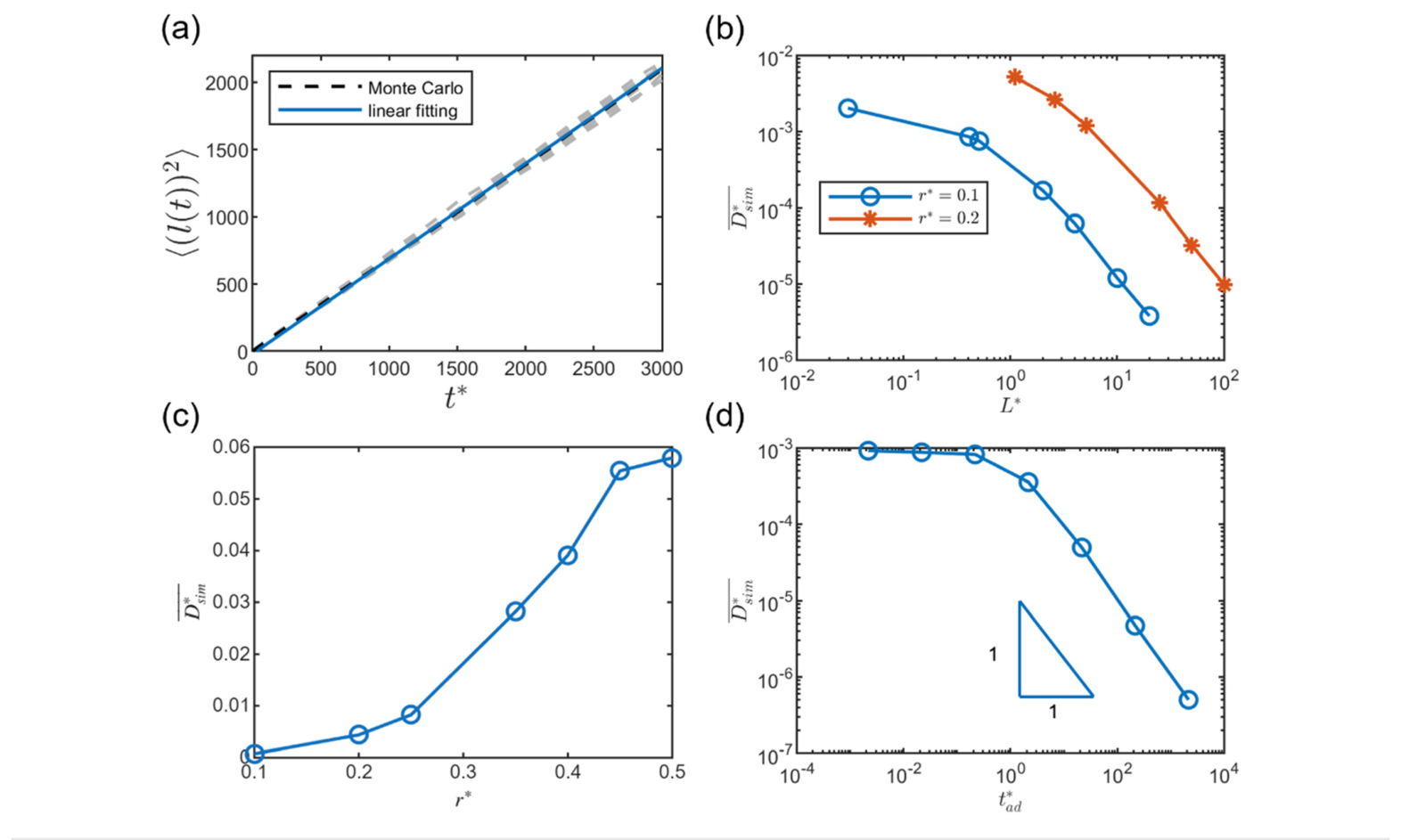
Fig. 1 Mean squared displacement and calibration of the diffusion coefficient (Phys. Fluids 2025, Fig. 2)
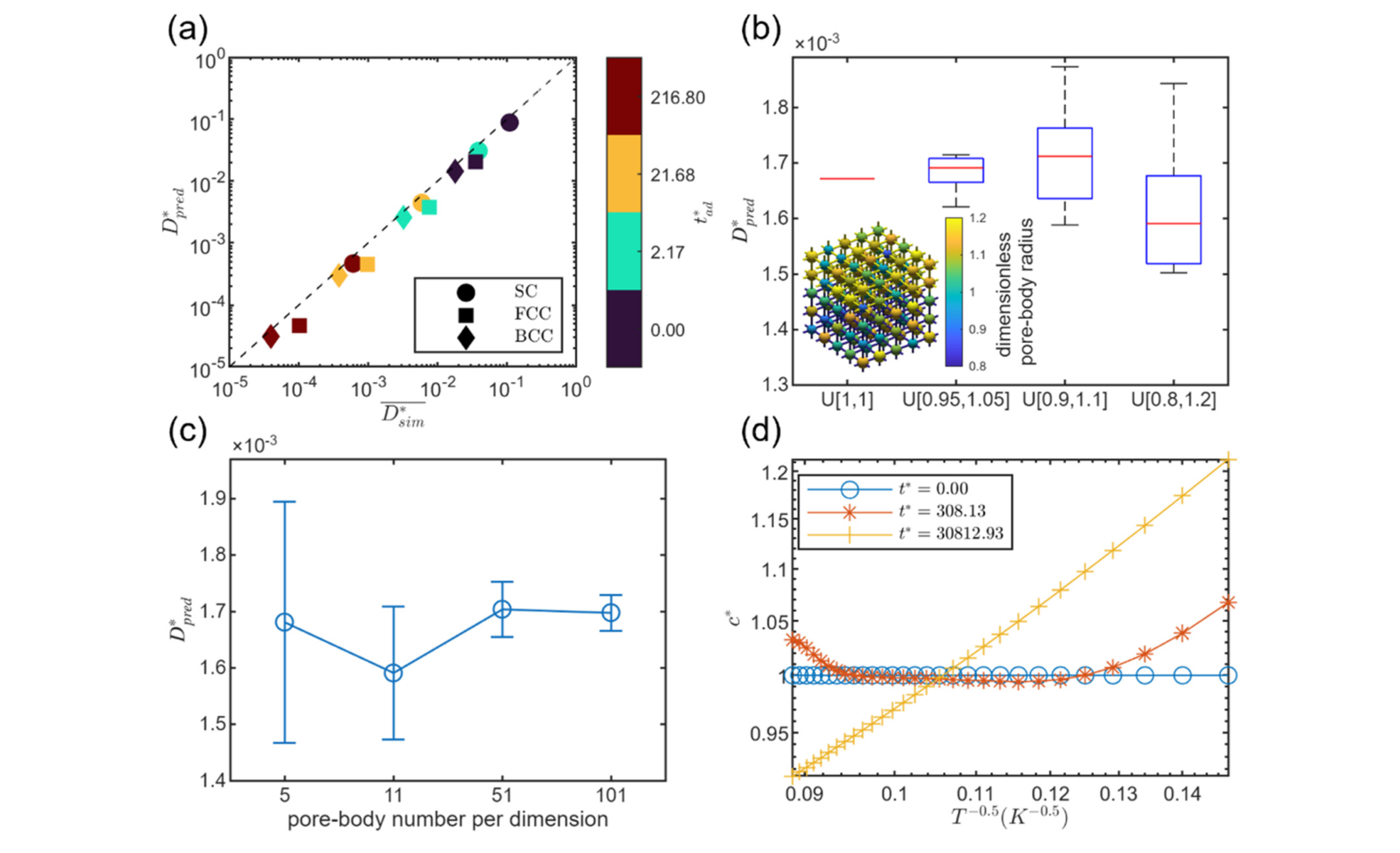
Fig. 2 Self-diffusion coefficients predicted by the p-PNM compared with direct simulations (Phys. Fluids 2025, Fig. 7)
2 Occurrence and long-term evolution of water ice in lunar polar regions
We built a billion-year-scale numerical model of potential water ice in permanently shadowed regions (PSRs): loss at the warmer PSR margins and vapor supply from lower latitudes are the two main mechanisms shaping the spatial distribution. Large cold traps (radius > 20 m) can retain most of their initial ice over geological times and may serve as the primary water source for future bases, while ice in micro cold traps (radius < 1 m) is transient. Mixing between shallow and deep regolith ice is very limited, which can be used to distinguish their different geological origins (Icarus 2026).
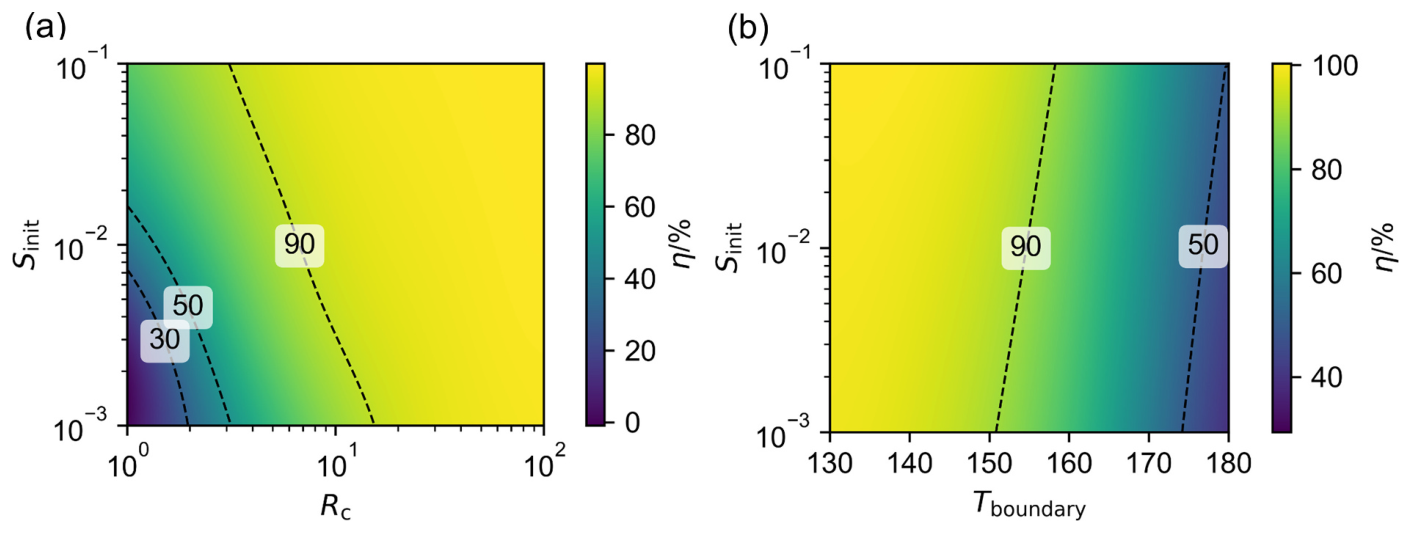
Fig. 3 Water-ice retention of initially icy cold traps after one billion years (Icarus 2026, Fig. 11)
We also derived an Ostwald ripening theory for rarefied environments: small ice grains in lunar regolith pores coarsen into large crystals over geological times through mass transfer. On the deep-cold (< 100 K) surfaces of PSRs, water ice keeps its initial deposition form over long times, whereas in warmer (> 120 K) non-PSR or subsurface regions, ice populations ripen significantly into crystals comparable in size to regolith grains. Based on this, regolith simulants with target ice grain sizes can be prepared by tuning temperature and ripening time (Space Science & Spacecraft Technology 2025).
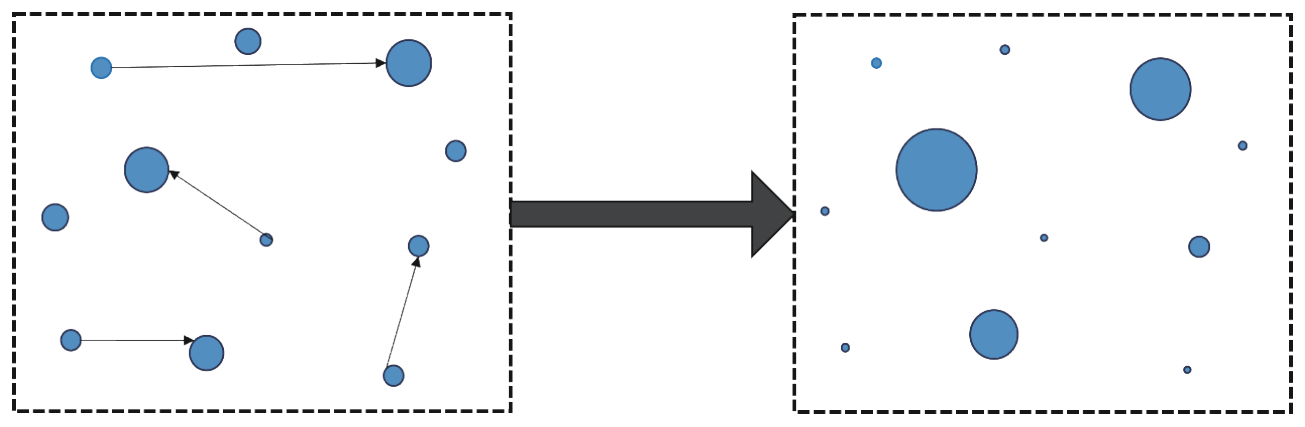
Fig. 4 Ostwald ripening of water-ice particle clusters in lunar regolith pores (Space Sci. & Spacecr. Technol. 2025, Fig. 2)
3 Human activities disturbing the lunar water environment
Using spectral data covering the water absorption bands from the Chang’e-5 and Chang’e-6 landers, together with images of rocket plume–regolith interactions recorded by landing cameras and quantitative water diffusion simulations, we established an injection-and-release model of rocket-exhaust-derived water at lunar landing sites: plumes inject water into the regolith, from which the water is gradually released back to space; in vacuum and at high temperatures this process is slower than previously recognized, as water adheres to regolith grains; in cold polar regions the influence of rocket exhaust on surface water migration is more significant. We therefore suggest that future missions, especially those to the polar regions, take planetary protection into account (Journal of Geophysical Research: Planets 2026).
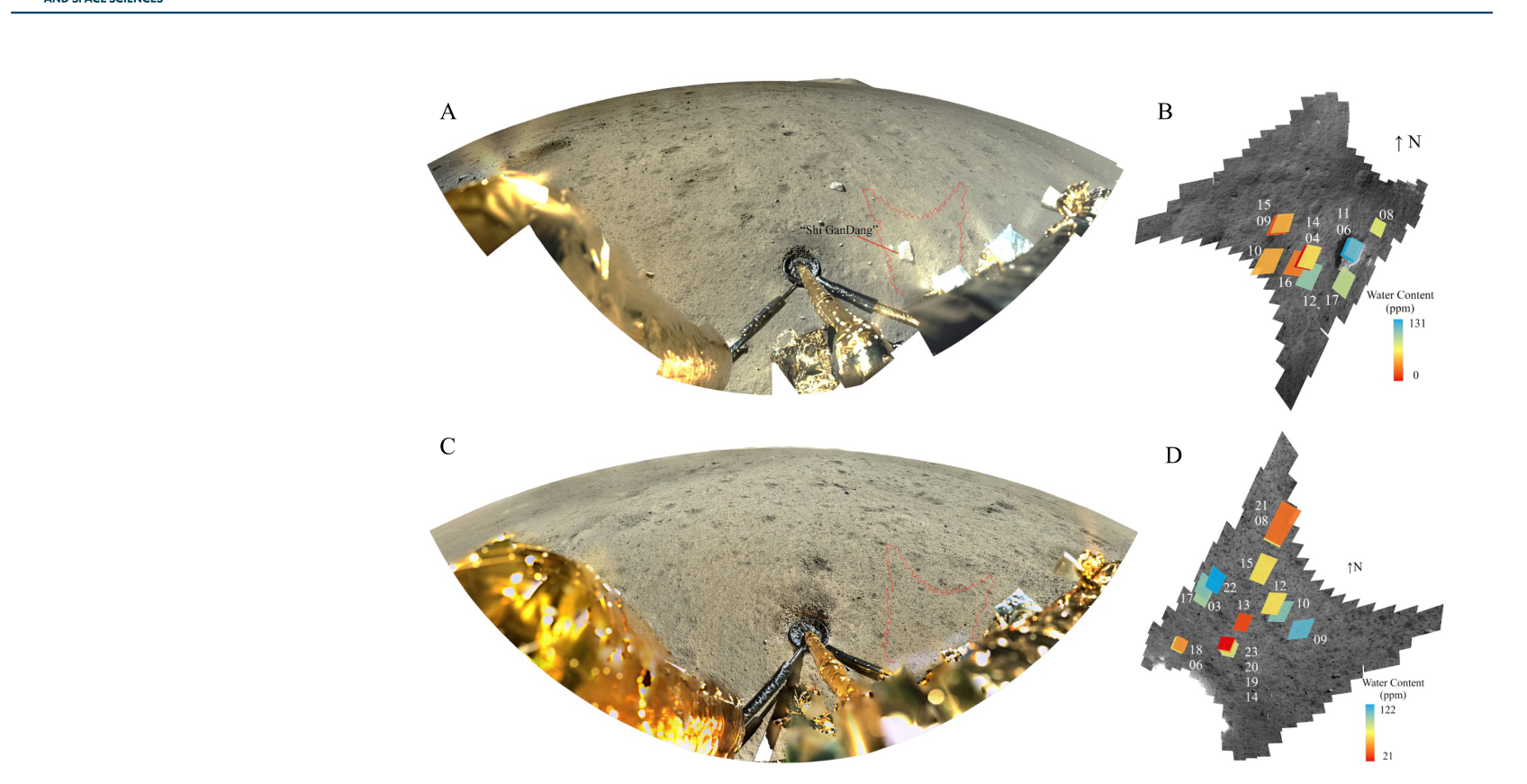
Fig. 5 Observation regions of the Chang’e-5 and Chang’e-6 landing sites (JGR: Planets 2026, Fig. 1)
Papers
Sunpeng Zhou, Ke Xu*. 2025. “Upscale rarefied volatile diffusion in porous media: A pore network modeling approach”. Physics of Fluids 37: 096608. https://doi.org/10.1063/5.0284757
Sunpeng Zhou, Zhenpeng Wang, Shanshan Zhou, Hang Deng, Qinggong Wang, Rui Wu, Wei Yao, Ke Xu*. 2026. “Retention of water ice in lunar permanent shadowed regions”. Icarus 452: 117022. https://doi.org/10.1016/j.icarus.2026.117022
周孙鹏, 徐克*. 2025. “月壤孔隙内水冰奥斯特瓦尔德熟化理论”. 《空间科学与试验学报》2(3): 11–18. https://doi.org/10.19963/j.cnki.2097-4302.2025.03.002
徐克*, 周孙鹏, 杨阳, 段慧玲. 2024. “月壤多孔介质中水分子原位扩散规律研究进展”. 《空间科学与试验学报》1(3): 6–16. https://doi.org/10.19963/j.cnki.2097-4302.2024.03.002
Mingyu Tian#, Yang Yang#, Yuqi Qian*, Ke Xu*, Meizhu Wang, Lingzhi Sun, James Head, Guochun Zhao*. 2026. “Rocket exhaust derived surface water migration at lunar landing sites”. Journal of Geophysical Research: Planets 131: e2025JE009582. https://doi.org/10.1029/2025JE009582
This page was compiled from the group’s publications with AI assistance.